
Education · Reference
Two pillars of regenerative biologics.
Stem cells and exosomes are the structural and signaling layers of regenerative medicine. The reference below summarizes the biology our portfolio is built on. It is educational and does not constitute a clinical claim about any specific HRC product.
“One is the source. The other is the signal. Stem cells differentiate; the exosomes they release carry biochemical signals between cells in laboratory studies. In vivo behavior remains under active research.”
Exosomes
Cell-derived extracellular vesicles that carry biochemical signals between cells. The signaling layer of regenerative medicine. Cell-free, non-engrafting, and the most actively researched modality in the field today.
- Extracellular vesicles
- Cell-derived, membrane-bound particles released into the extracellular space, as characterized in the literature.
- Molecular cargo
- Exosomes carry proteins, mRNA, and miRNA between cells, a mechanism studied extensively in laboratory settings.
- Cell-to-cell signaling
- Exosomes are understood as a signaling layer that mediates communication between cells in vitro.
- Active research
- In vivo behavior and therapeutic application remain under active research across the field.
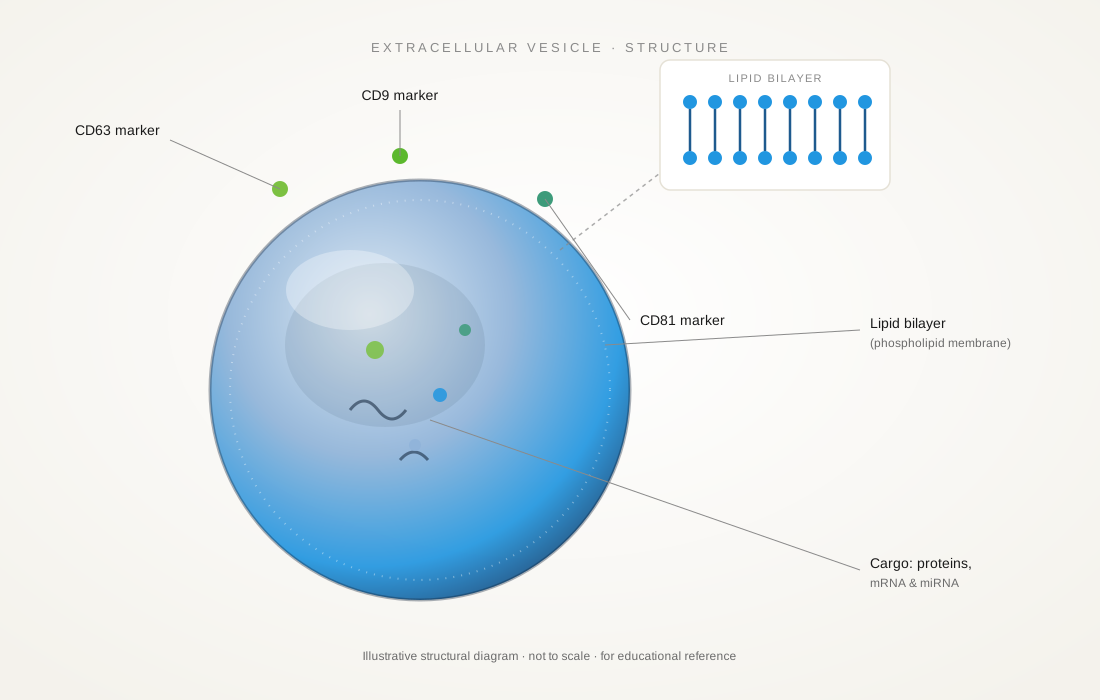
Where exosome biology is under active study
This page does not enumerate specific therapeutic categories. No HRC product is approved by the FDA as a drug, and nothing here constitutes a clinical claim. A peer-reviewed literature reference is available in the HRC science brief — request access through your dedicated representative.
Stem cells
Self-renewing cells that differentiate into specialized types. The structural layer of regenerative biology, and the source from which exosomes are released.
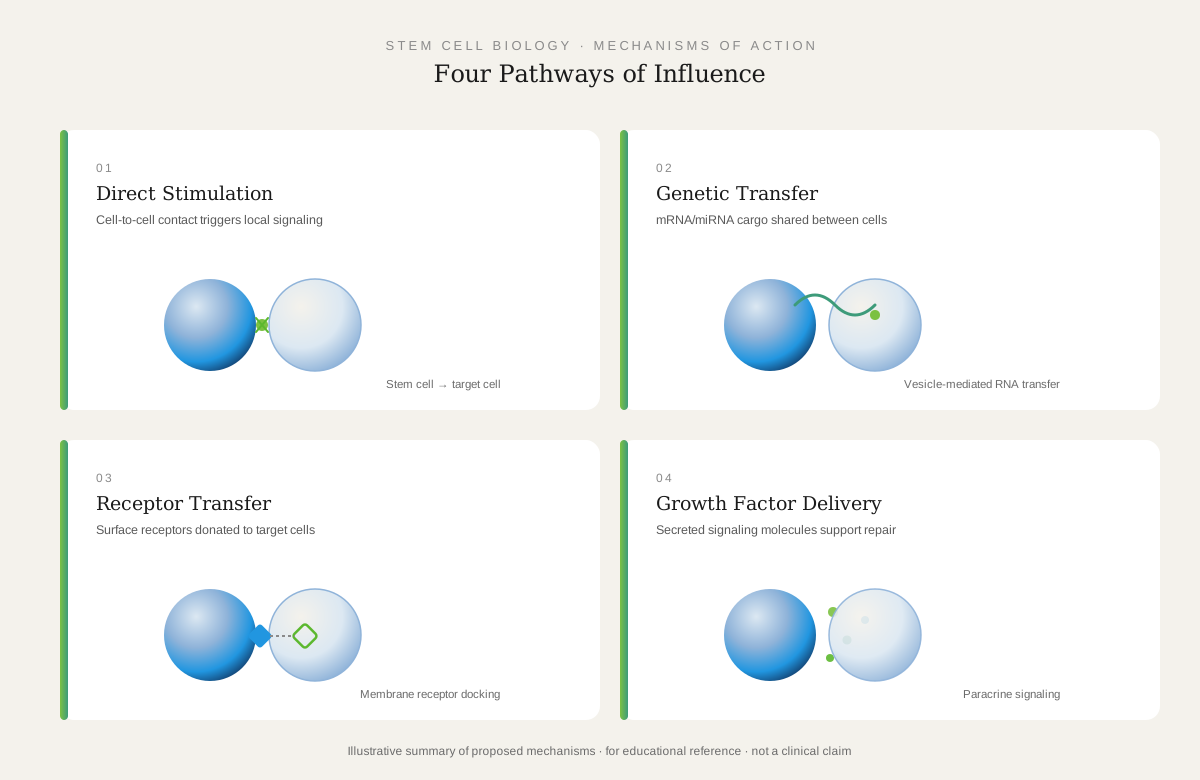
Four mechanisms of action
Direct stimulation
Stem cells can directly stimulate surrounding cell activity.
Genetic information transfer
Transfer of genetic material between cells has been observed in laboratory studies.
Surface receptor transfer
Surface receptors can be transferred between cells, altering downstream signaling.
Growth factor delivery
Stem cells release growth factors that influence the surrounding cellular environment.
Different mechanisms, complementary roles.
Stem cells
- Differentiate and replenish cell populations
- Engraft and persist at the site
- Source of exosomes
- Structural, longer-acting role
Exosomes
- Deliver biochemical signals between cells
- Cell-free, no engraftment
- Released by stem cells
- Signaling, faster-acting role
Provider accounts
Questions about a specific product?
Your dedicated representative can walk through the science and specifications behind any product in the portfolio.